Buying guides for anyone specifying plastic recycling machines — shredders and crushers, washing lines, pelletizing lines, and pipe or drinking-straw extrusion lines. Each guide compares the machine types available, explains what really drives capacity and price, and lists the information a manufacturer needs before it can quote accurately. Use them to shortlist a line configuration before you send an enquiry, then check the delivered project examples to see comparable output figures.
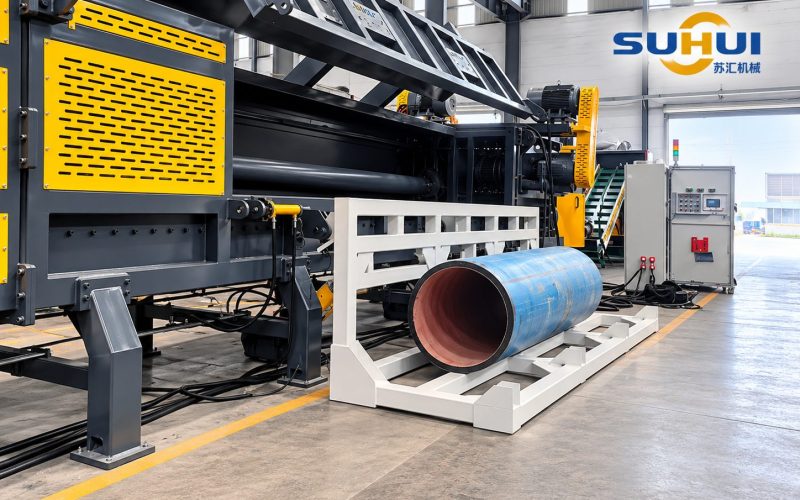
Learn how to choose the right HDPE pipe shredder based on pipe diameter, wall thickness, feeding system, capacity and output size. A practical buyer’s guide from SUHUI.
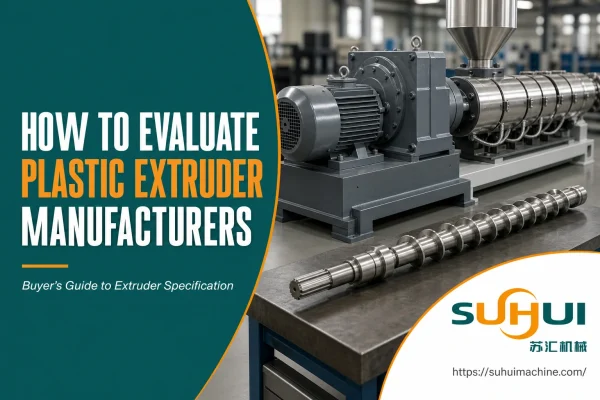
Two suppliers quote the same extruder and the prices differ by thirty percent, because the items that create the gap are missing from both documents. This guide covers the six hardware facts that make plastic extruder manufacturers comparable — screw and barrel surface treatment, L over D stated as a number, who machines the die head, control component brands, a trial run on your own resin with a recorded tolerance band, and who pays for die corrections during ramp-up.
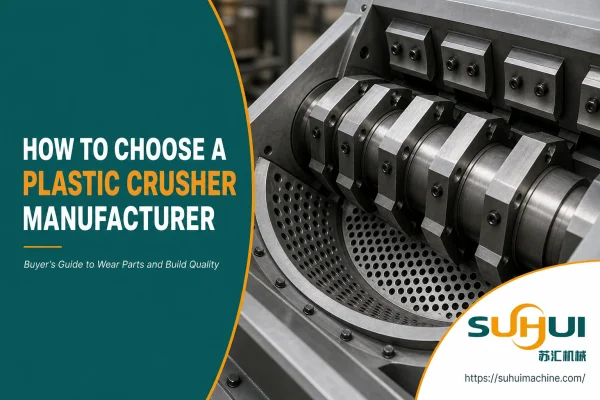
A crusher is a wear machine — the purchase is one payment and the blades, screens and bearings are payments you keep making, which is why buying on purchase price alone gets it wrong. This guide covers the six checks specific to size reduction equipment: blade steel grade and heat treatment with the regrind count that follows from it, rotor shaft and bearing selection with housings outboard of the cutting chamber, whether the welded frame was stress relieved before machining, how long a screen change actually takes, whether the acoustic enclosure and dust extraction sit inside the quoted price, and what to measure when the supplier runs your own scrap.
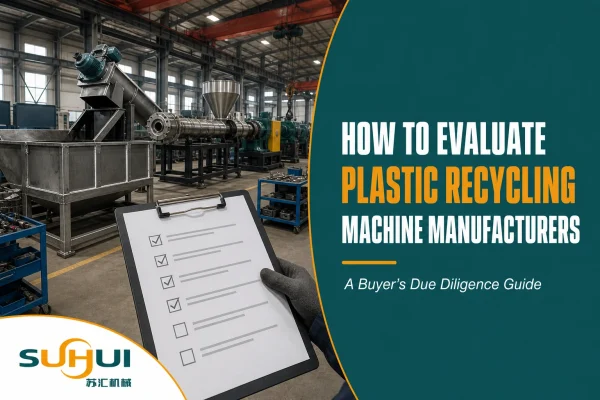
Search for plastic recycling machine manufacturers and you get dozens of companies whose websites are close to interchangeable. Some own a workshop, some own a sales office and a supplier list. This guide covers the ten checks that tell them apart — who physically builds the line, whether the certificates resolve to a public register, whether the machine will be test-run on your own material, how the technical conversation goes before a price appears, and how long wear parts stay available.
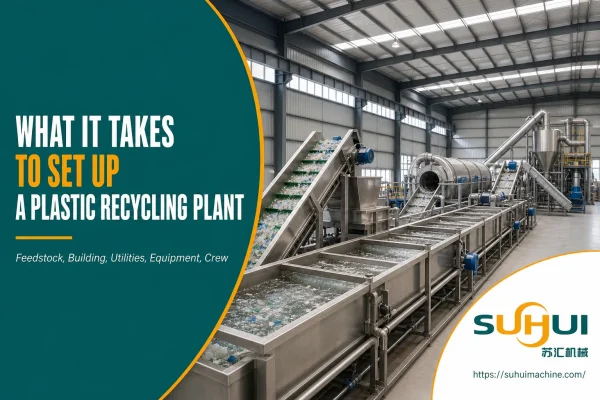
Setting up a plastic recycling plant is seven decisions taken in order — contracted feedstock, capacity, process route, building and utilities, equipment, installation and staffing. This guide works through each one using published SUHUI washing and pelletizing line configurations, so footprint, clear height, installed power, steam demand and operators per shift can be checked against real figures rather than estimated.
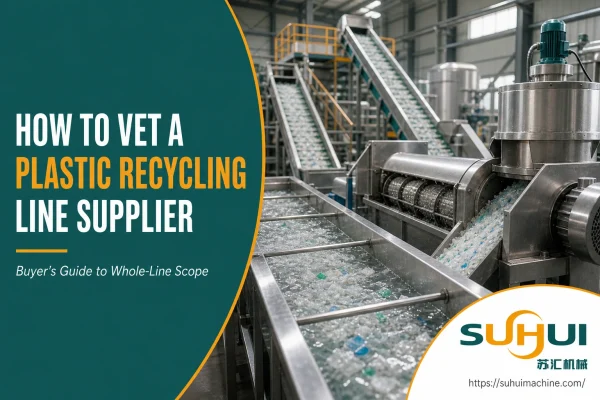
A washing line is six or seven machines that have to hand material to each other continuously, and almost everything that goes wrong after commissioning happens in the handover rather than inside a machine. This guide covers the six checks that separate a line supplier from a machine supplier — what sits in the gaps between machines, which stages are built in-house, why a line rating is a bottleneck figure rather than a sum, how a whole-line trial is measured as mass balance, who owns a fault that crosses two stages, and whether water, steam and effluent are inside the scope of supply.
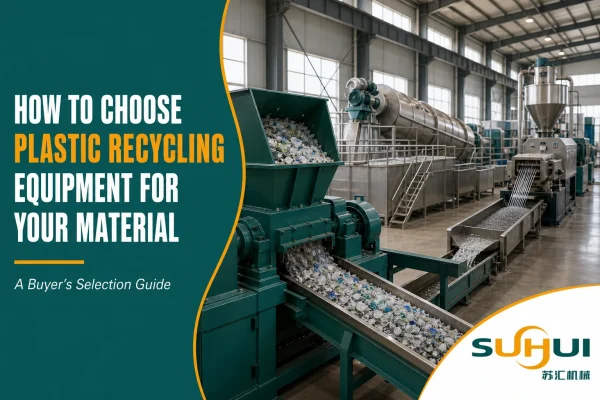
Plastic recycling equipment selection is a sequence, not a catalogue choice. This guide works through the four inputs that decide a machine list — which polymer you have and what shape it arrives in, how contaminated it honestly is, the throughput you can actually feed, and whether you sell flakes, pellets or finished product — then routes each answer to the size reduction, washing, pelletizing, auxiliary and extrusion equipment it implies, with the six mistakes that recur most often.


 29 Oct